Pregnancy brings many changes to your body, and your abdominal wall is no exception. As your baby grows, an existing weakness in the abdominal muscles may become more noticeable, or a hernia that previously caused no symptoms may suddenly become easier to see or feel.
Discovering a new lump around your belly button or experiencing unfamiliar abdominal discomfort can understandably be worrying. But a hernia during pregnancy does not necessarily mean you will need surgery while you are pregnant.
So, what should you look out for, and when should you get it checked? Here we explain why hernias can become noticeable during pregnancy, the symptoms to watch for, and when to seek medical advice.
Can You Get a Hernia During Pregnancy?
A hernia can develop during pregnancy, or an existing hernia may become more noticeable as the pregnancy progresses.
It occurs when tissue pushes through a weak area in the muscle or connective tissue that normally contains it. As pregnancy progresses, the abdominal wall stretches to accommodate the growing uterus, and intra-abdominal pressure changes. This can make an existing weakness, or a previously unnoticed hernia, more apparent.
What Types of Hernia Can Occur During Pregnancy?
Several types of hernia can affect women during or around pregnancy.
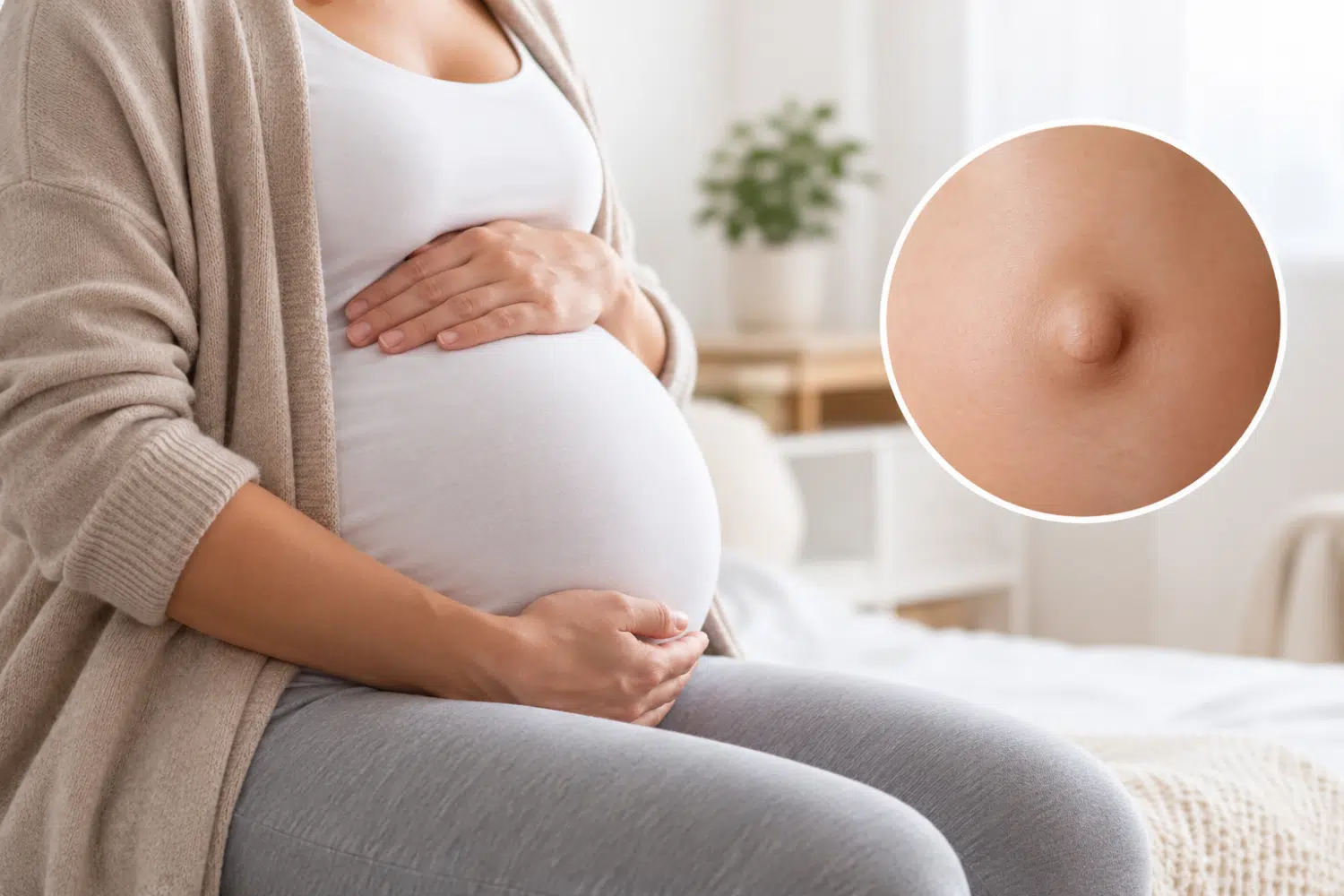
An umbilical hernia in pregnancy occurs around the belly button and may appear as a soft lump or bulge at or close to the navel. You may also hear this described informally as a navel hernia in pregnancy or belly-button hernia.
An incisional hernia can develop through an area of weakness associated with a previous abdominal operation. Groin hernias can also occur, although not every swelling in the groin or abdomen during pregnancy is a hernia.
If you notice a new or unexplained lump, it is always better to have it assessed by a healthcare professional rather than trying to work out the cause yourself.
What Are the Symptoms of a Hernia During Pregnancy?
When it comes to hernia symptoms during pregnancy, a new lump or bulge is often the most noticeable sign. Some hernias cause discomfort, while others may cause very few symptoms at all.
Possible hernia symptoms signs include:
- A lump or bulge around the belly button, abdomen or groin
- A bulge that becomes more noticeable when standing, coughing or straining
- Aching or discomfort around the affected area
- Tenderness around the lump
- A feeling of pressure or pulling in the abdominal wall
Aches and abdominal discomfort can occur for many reasons during pregnancy. If you develop a new lump, persistent pain or symptoms that concern you, speak to your midwife, GP or maternity team.
Is a Protruding Belly Button an Umbilical Hernia?
Not necessarily. As your abdomen expands, your belly button may naturally become flatter or start to protrude. This alone does not mean that you have an umbilical hernia during pregnancy.
Pregnancy can also cause separation of the abdominal muscles, known as diastasis recti. This is different from a hernia, although the two can sometimes occur together.
If you notice a distinct lump around your navel or are unsure whether a change is simply part of pregnancy, a healthcare professional can examine the area and advise whether further assessment is needed.
Is a Hernia During Pregnancy Dangerous?
Many abdominal wall hernias identified during pregnancy do not require emergency treatment. If a hernia is small and causes few or no symptoms, monitoring may be appropriate depending on your individual circumstances.
There are, however, certain symptoms that should not be ignored. A hernia can occasionally become trapped. More seriously, the blood supply to trapped tissue can become compromised, known as strangulation.
Seek urgent medical attention if you experience:
- Sudden or severe abdominal pain
- A hernia that becomes very painful or tender
- A lump that becomes hard or cannot be pushed back
- Nausea or vomiting alongside a painful swelling
- Changes in the colour of the skin over the hernia
Severe or unexplained abdominal pain during pregnancy should always be medically assessed, whether or not you think a hernia is responsible.
Can You Have Hernia Surgery During Pregnancy?
Having a hernia in pregnancy does not automatically mean surgery will be necessary while you are pregnant.
For an uncomplicated hernia, elective surgery can often be postponed until after pregnancy. A systematic review of ventral hernia and pregnancy supports this approach, although the timing of treatment should always be considered on an individual basis.
The situation is different if complications are suspected. A trapped or strangulated hernia requires urgent surgical assessment, with treatment based on the individual clinical circumstances.
If your hernia is not causing an emergency, your healthcare team can advise whether monitoring it during pregnancy and reassessing it after your baby is born is appropriate.
What Happens to a Hernia After Pregnancy?
Once your baby is born, the stretching and pressure affecting your abdominal wall gradually reduce. You may therefore find that the appearance or symptoms of your hernia change as your body recovers.
If a lump or discomfort persists after childbirth, however, it is worth having it assessed. A specialist can establish the type and size of the hernia and discuss whether treatment is necessary.
Thinking about another pregnancy? This is worth mentioning during your consultation. Research has found an association between pregnancy following abdominal hernia repair and an increased risk of recurrence. Your surgeon can take your symptoms, individual circumstances and future pregnancy plans into account when discussing whether and when repair may be appropriate.
Considering Hernia Treatment After Pregnancy?
If a hernia remains uncomfortable or troublesome after childbirth, specialist assessment can help you understand what is happening and whether treatment may be appropriate.
At Phoenix Health, our consultant surgeons provide private hernia surgery for a range of abdominal wall and groin hernias. Depending on the type of hernia and your individual circumstances, treatment may involve open or laparoscopic (keyhole) repair.
Your consultant can assess your symptoms and discuss whether hernia surgery is appropriate, the timing of treatment and what you can expect from recovery.
If you are currently pregnant and concerned about a possible hernia, speak to your GP, midwife or maternity team. If you develop sudden severe pain, vomiting or a hernia that becomes hard or very tender, seek urgent medical attention.
References
Oma E, Jensen KK, Jorgensen LN. Ventral hernia and pregnancy: A systematic review. The American Journal of Surgery. 2019;217(1):163–168.
https://www.americanjournalofsurgery.com/article/S0002-9610(18)30329-5/abstract
Lappen JR, Sheyn D, Hackney DN. Does pregnancy increase the risk of abdominal hernia recurrence after prepregnancy surgical repair? American Journal of Obstetrics & Gynecology. 2016;215(3):390.e1–390.e5.
https://www.ajog.org/article/S0002-9378(16)30198-3/abstract
Medically Reviewed by Lujain Alhassan, BSc, ANutr
Registered Associate Nutritionist and Bariatric Nutrition