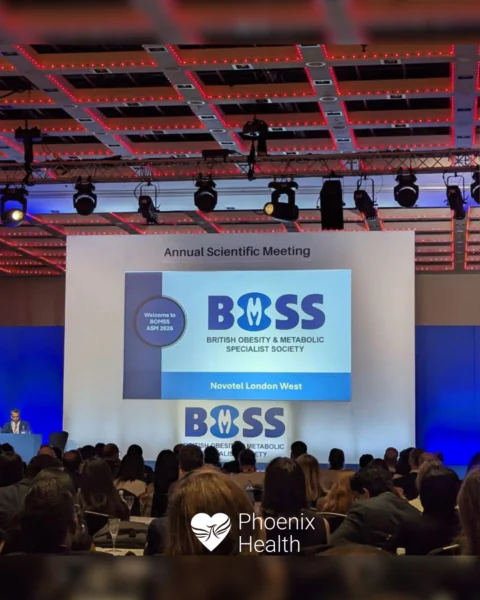
At Phoenix Health, we are delighted to share that our research was presented at the British Obesity & Metabolic Surgery Society (BOMSS) Annual Scientific Meeting 2026, highlighting our commitment to advancing bariatric care through research, expertise, and improved patient outcomes.
This work, led by our experienced bariatric team, explores how expert surgical decision-making supports safe, personalised care and positive patient outcomes.
Research Presented
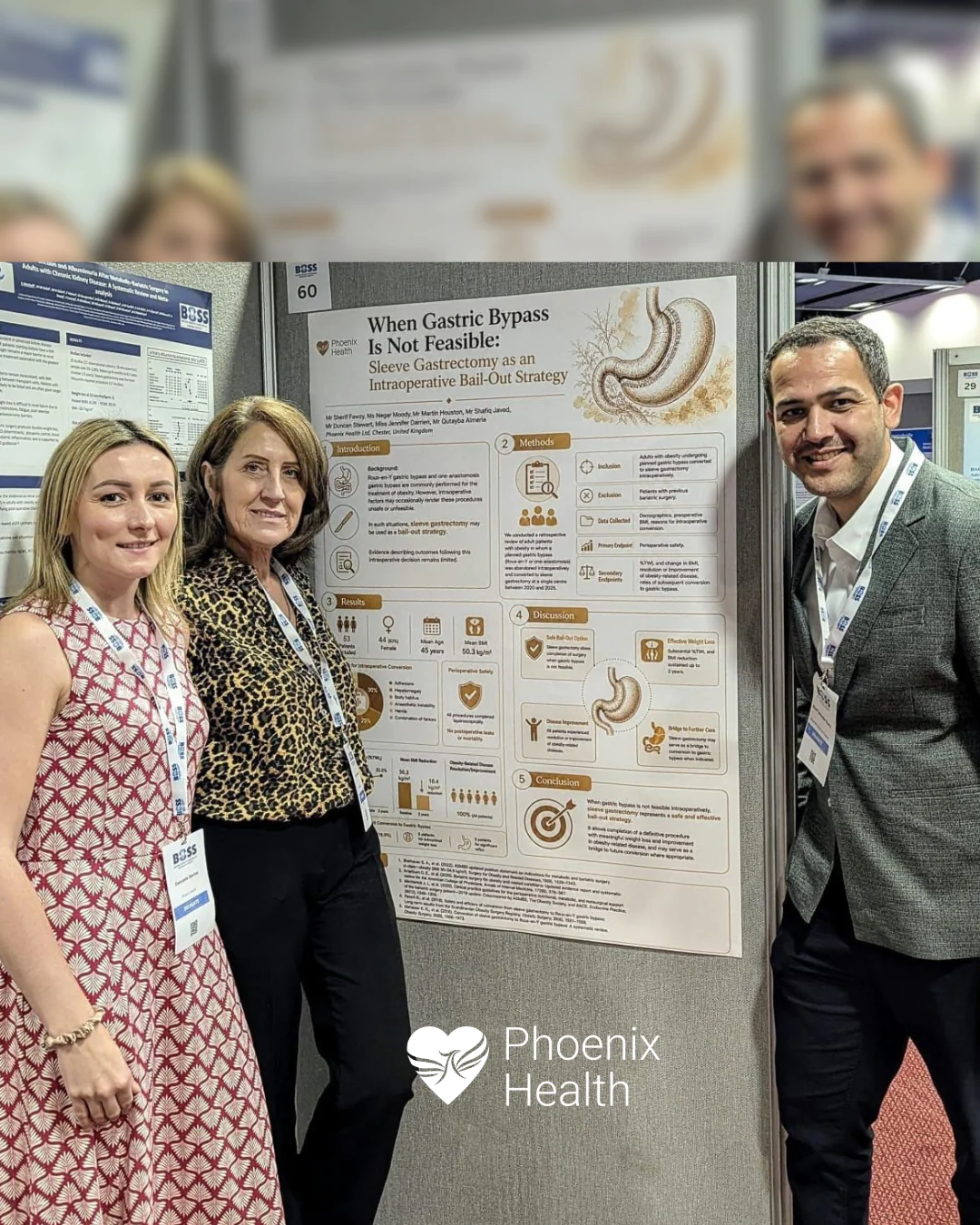
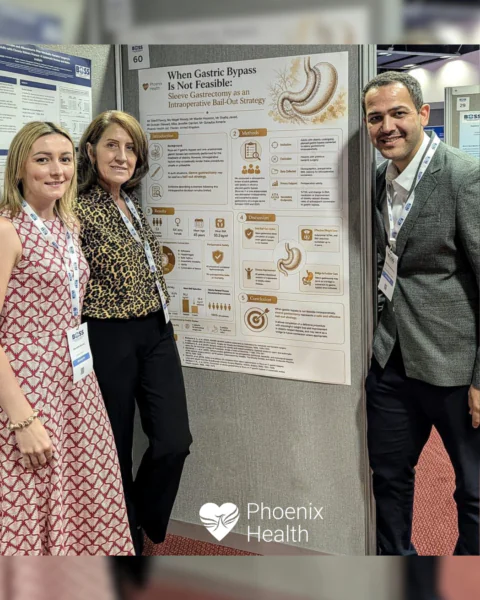
“When Gastric Bypass Is Not Feasible: Sleeve Gastrectomy as an Intraoperative Bail-Out Strategy”
Authors:
Mr Sherif Fawzy, Ms Negar Moody, Mr Martin Houston, Mr Shafiq Javed, Mr Duncan Stewart, Miss Jennifer Darrien, and Mr Qutayba Almerie
Affiliation:
Phoenix Health Ltd, Chester, United Kingdom
Putting Patient Safety First
Bariatric surgery is carefully planned following a detailed assessment, with each procedure selected based on the individual needs of the patient. Bariatric Procedures such as Roux-en-Y gastric bypass (RYGB), one-anastomosis gastric bypass (OAGB), and sleeve gastrectomy are established treatments that can help patients achieve significant weight loss and improve obesity-related health conditions.
Occasionally, individual factors identified during surgery may mean the planned approach needs to be adapted to ensure the safest outcome. In these situations, expert surgical judgement is essential.
At Phoenix Health, patient safety always comes first. Our surgeons use their experience and expertise to make the most appropriate decisions for every patient.
Looking Beyond the Surgical Decision
Our BOMSS-presented research explored situations where sleeve gastrectomy was performed when proceeding with a planned gastric bypass was not considered the safest option for the patient.
The study looked beyond the surgical decision itself and reviewed the outcomes that followed — including safety, weight loss results, improvement in obesity-related health conditions, and whether further bariatric treatment was required.
BOMSS – 2026
Study Findings and Patient Outcomes
The Phoenix Health team reviewed 53 patients between 2020 and 2025. The findings demonstrated encouraging outcomes:
Patient profile: 83% female, average age 45 years, average starting BMI 50.3 kg/m²
Reasons for adapting the surgical approach: adhesions (30%), enlarged liver/hepatomegaly (25%), body habitus (15%), anaesthetic considerations (10%), hernia (10%), and combined factors (10%)
Safety outcomes: all procedures completed laparoscopically, with no postoperative leaks and no mortality reported
Weight loss outcomes: average total weight loss was 23.2% at 6 months, 29.6% at 12 months, and 33.5% at 2 years
Health improvements: obesity-related conditions improved following treatment
Further treatment: 10 patients (18.9%) later underwent conversion to gastric bypass when clinically appropriate.
The findings suggest that sleeve gastrectomy can be a safe and effective approach for selected patients when it is the most appropriate clinical decision. The study highlights the importance of personalised bariatric care, ensuring treatment decisions are guided by each patient’s individual needs, safety, and long-term health outcomes.
Continuing Our Commitment to Excellence
Our presentation at BOMSS 2026 reflects Phoenix Health’s commitment to advancing bariatric care through research, clinical expertise, and continuous improvement.
Congratulations to all the authors involved in this valuable contribution to bariatric care.
At Phoenix Health, we remain focused on delivering safe, evidence-based, and personalised treatment with patient safety at the heart of every decision.
Medically Reviewed by Mr. Qutayba Almerie, MD, MSc, FRCS
Consultant Upper GI & Bariatric Surgeon, Medical Director at Phoenix Health.