Choosing between mini gastric bypass and gastric sleeve surgery involves more than comparing weight loss results. Both procedures can offer significant health benefits, but they work differently and have their own considerations.
So, which might be more suitable for you? Let’s explore the key differences, from expected weight loss and recovery to acid reflux and long-term nutritional needs.
What Is a Mini Gastric Bypass?
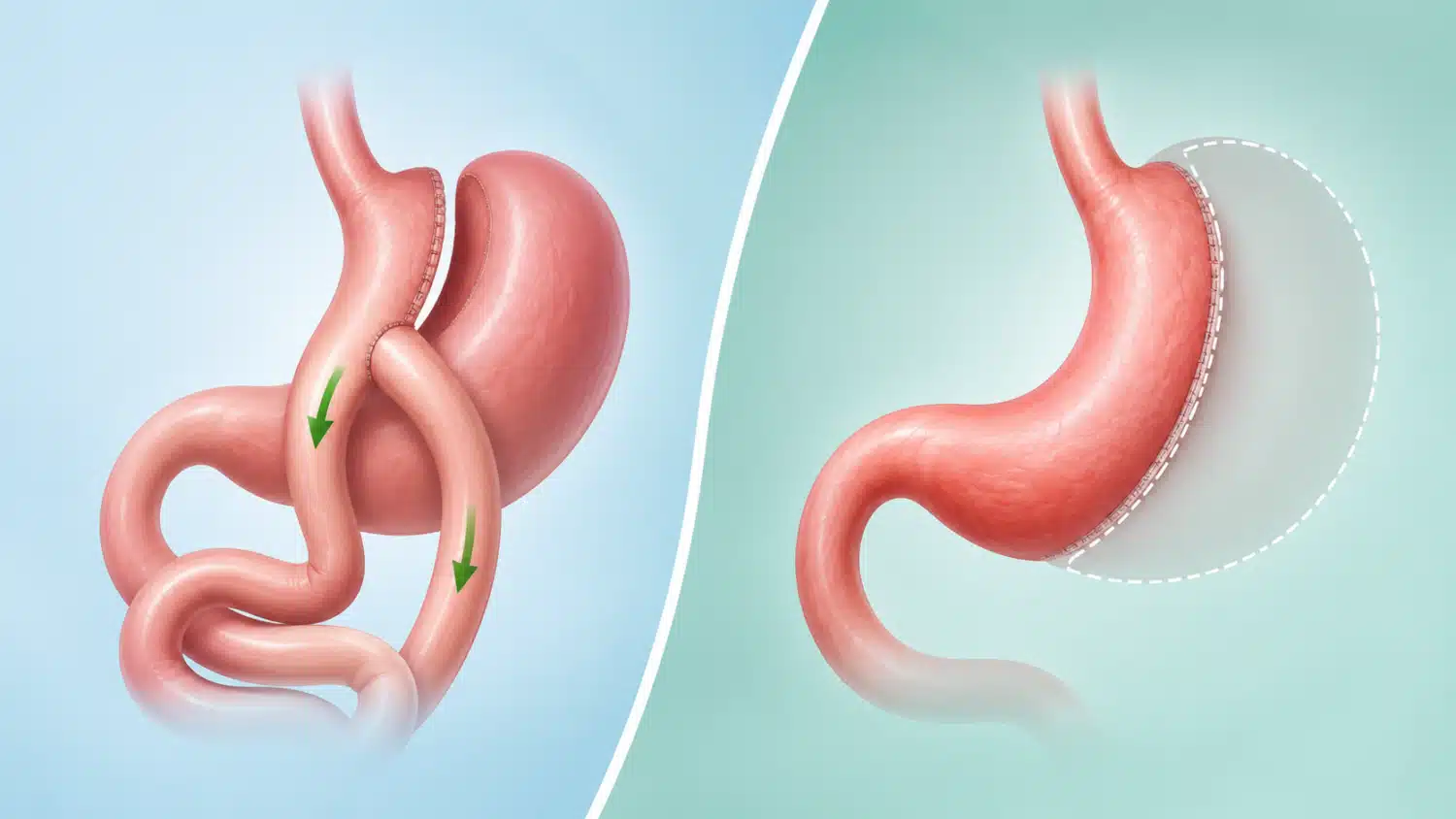
A mini gastric bypass, also known as One Anastomosis Gastric Bypass (OAGB), involves creating a long, narrow stomach pouch and connecting it to the small intestine, bypassing part of the normal digestive route.
This helps with weight loss by limiting portion sizes, reducing some calorie and nutrient absorption, and changing gut hormones that influence appetite and blood sugar control.
Despite its name, ‘mini’ doesn’t mean a smaller operation. It refers to the single connection between the stomach and intestine, compared with two in a traditional Roux-en-Y gastric bypass.
What Is Gastric Sleeve Surgery?
During gastric sleeve surgery, around 75–80% of the stomach is removed, leaving a smaller, sleeve-shaped stomach. This means you’ll feel full after eating smaller portions.
The surgery also changes hunger hormones, including ghrelin, which can help reduce your appetite.
Unlike mini gastric bypass, food still follows its normal route through the digestive system, as the small intestine isn’t bypassed. However, because part of the stomach is permanently removed, the procedure cannot be reversed.
Which Weight Loss Surgery Helps You Lose More Weight?
Both procedures can lead to substantial weight loss, particularly during the first 12–18 months after surgery.
Research comparing the two procedures suggests that mini gastric bypass may lead to greater average weight loss than gastric sleeve surgery, although individual results vary.
One reason is that mini gastric bypass combines a smaller stomach with changes to the intestinal pathway. Gastric sleeve surgery mainly works by reducing stomach capacity and altering appetite-related hormones. However, greater weight loss doesn’t automatically make one operation the better choice.
For instance, a patient may achieve excellent results following a gastric sleeve without needing an intestinal bypass. Another patient may benefit more from the additional metabolic effects of mini gastric bypass. Your starting BMI, medical history, eating habits, and long-term follow-up all influence the outcome.
What If You Have Type 2 Diabetes?
If you have type 2 diabetes, this is an important part of the discussion with your bariatric surgeon. Both procedures can improve blood sugar control, sometimes before substantial weight loss.
Mini gastric bypass generally has stronger metabolic effects because it changes how food passes through the intestine and influences hormones involved in glucose regulation.
Many patients experience significant improvements in blood sugar control following weight loss surgery, with some achieving long-term remission of type 2 diabetes. However, individual results can vary.
Your surgeon will consider how long you’ve had diabetes, the medication you take, and your overall health when discussing which operation may be suitable.
Acid Reflux After Mini Gastric Bypass vs Gastric Sleeve
Acid reflux is another important factor when comparing these two procedures.
If you regularly experience acid reflux, heartburn, or have been diagnosed with gastro-oesophageal reflux disease (GORD), it’s worth discussing this during your initial bariatric assessment.
Gastric sleeve surgery can sometimes cause acid reflux or make existing symptoms worse because of changes to the stomach’s shape and pressure.
Mini gastric bypass has a different potential risk known as bile reflux, where digestive fluid flows backwards from the small intestine into the stomach pouch and sometimes the oesophagus.
If you already have significant reflux, your surgeon may suggest a traditional Roux-en-Y gastric bypass instead. They’ll review your symptoms and medical history, and may recommend further tests to help decide which procedure is most suitable for you.
Is Recovery Different After Mini Gastric Bypass and Gastric Sleeve?
Both are usually performed using keyhole surgery, with several small incisions in the abdomen.
You’ll need time to recover, and it’s normal to feel tired or uncomfortable during the early days. How quickly you return to work and everyday activities will depend on your recovery and the type of work you do.
Eating and Digestion After Surgery
Both mini gastric bypass and gastric sleeve surgery change how much you can comfortably eat, but they affect digestion in different ways.
With a gastric sleeve, food continues through the usual digestive route, although the stomach is much smaller. Mini gastric bypass changes this route by allowing food to bypass part of the small intestine, which can affect how certain nutrients are absorbed.
After either procedure, you’ll need to get used to smaller portions, eating slowly and chewing food thoroughly. Some patients may also experience dumping syndrome, which can cause symptoms such as nausea, sweating, or diarrhoea after eating, particularly following sugary meals.
Although the digestive changes differ, both procedures require long-term adjustments to eating habits and ongoing support from your bariatric team.
Do Both Procedures Require Lifelong Vitamins?
Yes. Lifelong vitamin and mineral supplementation is required after both procedures.
Mini gastric bypass carries a greater risk of certain nutritional deficiencies because food bypasses part of the small intestine, where nutrients would normally be absorbed. This can affect nutrients such as iron, vitamin B12, calcium, and fat-soluble vitamins
Gastric sleeve patients can also develop deficiencies, even though their intestine hasn’t been bypassed. Smaller food portions, changes in digestion, and reduced food intake can all contribute.
Regular blood tests are therefore essential after either operation. At Phoenix Health, we’ve partnered with INUVI to help make routine blood tests more convenient for bariatric patients, with blood samples collected at home. Our bariatric team will monitor your results and advise which supplements you need and whether any changes are necessary.
Can You Regain Weight After Either Procedure?
Yes, weight regain is possible after both mini gastric bypass and gastric sleeve surgery. Although both procedures can help patients achieve significant weight loss, maintaining those results requires ongoing changes to eating habits and lifestyle.
Over time, appetite may change, and factors such as eating patterns, physical activity, and other health conditions can influence weight. This doesn’t necessarily mean the surgery has failed.
Long-term follow-up and support from your bariatric team can help identify any difficulties early and support you in maintaining your results.
Which Weight Loss Surgery Is Right for You?
There’s no single operation that’s right for everyone.
A gastric sleeve may be suitable for someone who doesn’t need an intestinal bypass, while a mini gastric bypass may be considered when greater weight loss or metabolic benefits are important. However, reflux, nutritional risks, existing health conditions, and previous surgery can all affect that decision.
At Phoenix Health, our bariatric team will review your medical history, discuss what you hope to achieve, and explain the advantages and limitations of the available procedures.
With over 20 years of experience in bariatric care, our team carries out more than 500 NHS bariatric operations each year, alongside providing private weight loss surgery.
If you’re considering weight loss surgery, we’re here to answer your questions and help you understand your bariatric treatment options.
Medically Reviewed by Lujain Alhassan, BSc, ANutr
Registered Associate Nutritionist and Bariatric Nutrition
Enquiry Form