
Losing a significant amount of weight can bring plenty of positive changes. You may feel healthier, move more easily, and notice improvements in your everyday life. But you may also spot some changes to your body that you weren’t expecting.
Your breasts are one area where this can happen. They may look smaller, feel less full, or sit differently than they did before. You might also notice some loose or sagging skin, especially after significant weight loss.
So, if you’ve been wondering how to regain breast size after weight loss naturally, what can actually help? Let’s look at why these changes happen, what you can realistically do, and the options available if they continue to bother you.
Why Do Breasts Change After Weight Loss?
Breasts are made up of fatty, glandular, and connective tissue. Fatty tissue plays a part in giving your breasts their size and shape, so when you lose body fat, you may lose some volume from your breasts too.
Exactly how much they change will be different for everyone. Your age, genetics, skin elasticity, starting weight, and how much weight you lose can all make a difference.
Your skin also needs to adjust to your new body shape. After significant weight loss, it may not fully tighten around the smaller breast volume. This can leave your breasts looking less full or sitting lower than they did before.
Can You Regain Breast Size After Weight Loss Naturally?
Unfortunately, there isn’t a food, exercise, cream, or other natural treatment that has been proven to restore breast tissue lost during weight loss.
You might think that putting a little weight back on could help. While your breasts may gain some volume if you gain weight, there’s no way to tell your body where to store that extra fat. So, gaining weight specifically to increase your breast size may not give you the result you’re hoping for.
The good news is that there are still a few things you can do to support your changing body and potentially improve the overall appearance of your chest:
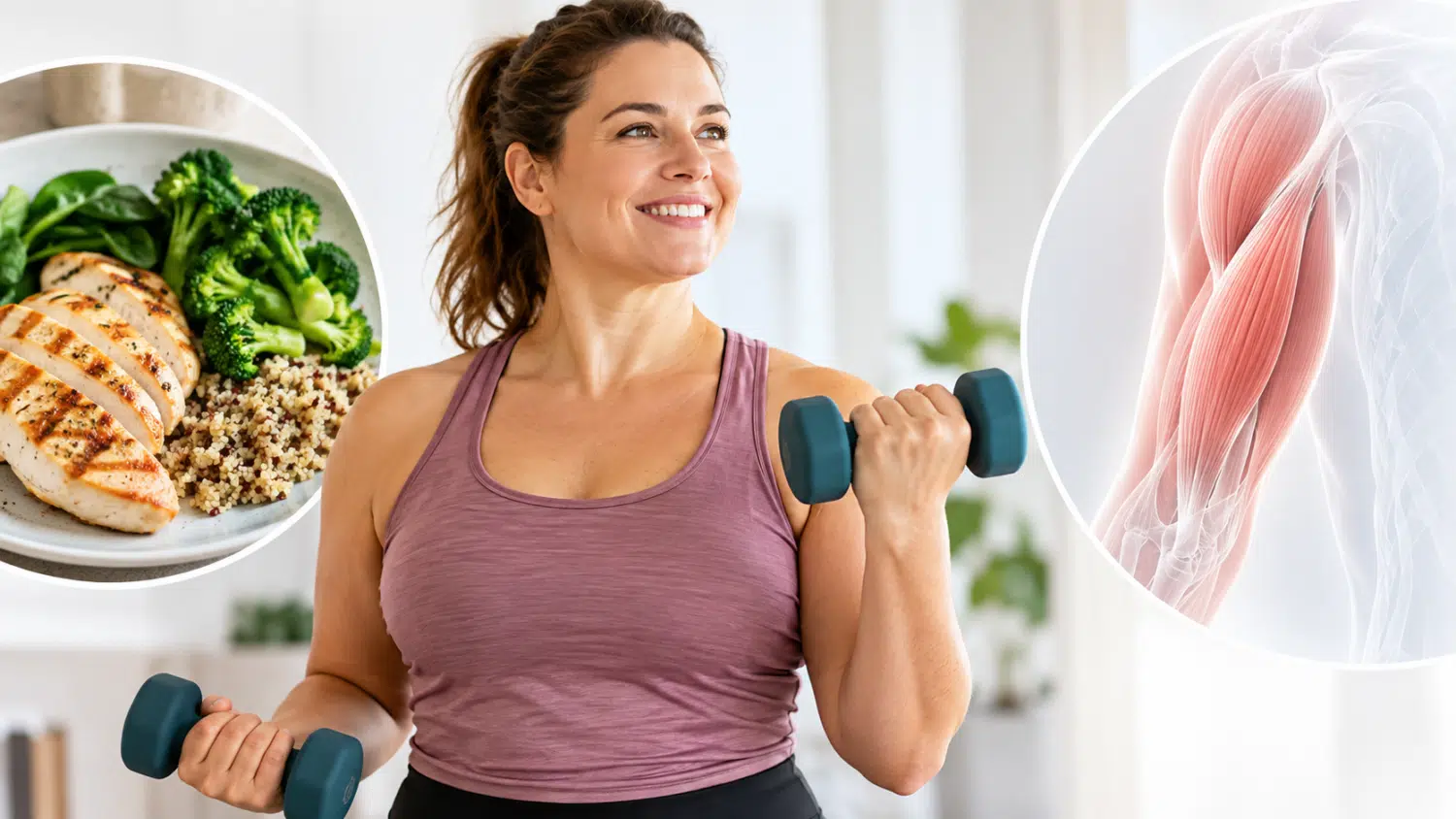
Strengthen your chest muscles: Exercises such as modified push-ups, chest presses, and chest flies work the muscles underneath your breasts. They won’t increase breast tissue, but stronger chest muscles may help create a firmer foundation.
Keep your weight stable: Once you reach a weight that is right for you, maintaining it can help avoid further changes caused by repeated weight loss and regain.
Eat well: Getting enough protein helps maintain muscle and supports the normal repair of body tissues. Vitamins and minerals are also important for your overall health.
Wear the right support: Your old bra size may no longer be right after significant weight loss. Getting properly measured can make a real difference to your comfort and support.
If you’ve recently had bariatric surgery, check with your bariatric team before starting new exercises or increasing your activity.
Give Your Body Time to Adjust
If you’re still losing weight, your body is still changing too. The amount and pace of weight loss can vary depending on the individual and the type of procedure, such as a gastric sleeve, gastric bypass or gastric band.
This is particularly important after bariatric surgery, when weight loss can continue over time. What your breasts, tummy, arms or other areas look like during active weight loss may not be how they look once your weight has settled.
Giving your body time to adjust can therefore be helpful before deciding how you feel about these changes.
At Phoenix Health, we know that weight-loss surgery is about much more than the operation itself.
Our bariatric team supports you throughout your weight-loss journey, from preparing for surgery to adjusting to the changes that come afterwards. Our aftercare includes ongoing support with nutrition, recovery, and maintaining your progress as your body changes.
Significant weight loss can take time, and so can getting used to your changing body. Having continued support means you have a team to turn to with questions along the way.
What About Food and Supplements?
There isn’t a particular food that can bring back lost breast volume. But eating well is still an important part of looking after yourself during and after weight loss. This matters even more after any bariatric surgery. Depending on the procedure you’ve had, you may need to pay particular attention to protein and take recommended vitamin and mineral supplements.
Your bariatric team or dietitian can advise you on what you need based on your bariatric procedure and individual circumstances.
You may also see supplements online claiming to increase breast size naturally. Be careful with these products, as their claims may not be backed by reliable scientific evidence.
Do Creams, Oils or Massage Work?
You’ve probably seen creams, oils or massage techniques promising firmer or fuller breasts. But can they really restore lost volume?
A moisturiser can keep your skin hydrated and help dry skin feel softer, but it cannot replace the fatty or glandular tissue that gives your breasts their volume.
The same goes for massage. While you may enjoy it as part of your usual skincare routine, there isn’t good evidence that massage can restore breast size after weight loss.
If something promises a dramatic or permanent increase in breast size without medical treatment, it’s worth being cautious.
What If Your Breast Changes Are Still Bothering You?
Natural approaches can only do so much. If your weight has stabilised and changes to your breasts are still bothering you, you may need to speak to an appropriately qualified healthcare professional about other options.
Depending on what you would like to change, these may include:
Breast lift (mastopexy): This removes excess skin and reshapes the breasts. It can help with sagging but does not necessarily add volume.
Breast augmentation: Breast implants can be used to add volume and change breast shape.
Fat transfer: For some people, fat can be taken from another area of the body and transferred to the breasts to add volume.
These are cosmetic procedures rather than bariatric treatments, and each comes with its own benefits, risks, limitations and recovery time. They won’t be suitable for everyone either.
If you’re considering cosmetic surgery after significant weight loss, speak to an appropriately qualified plastic surgeon who can assess your individual circumstances and explain your options.
When Should You Speak to Your GP?
A change in breast size or shape alongside weight loss can be quite normal. But it’s still important to watch for any new or unusual changes.
Speak to your GP if you notice a new lump in your breast or armpit, unusual nipple discharge, changes to the nipple or breast skin, persistent breast pain, or an unexplained change in the size or shape of one breast.
Even if you’ve recently lost a lot of weight, don’t assume that every new breast change is because of weight loss. If something doesn’t feel right or you’re worried about it, it’s always worth getting it checked.
References:
British Association of Plastic, Reconstructive and Aesthetic Surgeons (BAPRAS). Body contouring.
https://www.bapras.org.uk/public/patient-information/surgery-guides/body-contouring
NHS. How to check your breasts or chest. https://www.nhs.uk/conditions/how-to-check-your-breasts-or-chest/
https://www.nhs.uk/conditions/breast-cancer-in-women/symptoms-of-breast-cancer-in-women/
https://newsinhealth.nih.gov/2020/03/maintain-your-muscle
Medically Reviewed by Lujain Alhassan, BSc, ANutr
Registered Associate Nutritionist and Bariatric Nutrition